
Telling Time in English | B1–B2
In this lesson, students move from simple time recognition to confident spoken use. The lesson begins with practical real-life context, then builds the key structures for o’clock, past, to, quarter, half, and early minutes like oh-five. It finishes with controlled practice, guided writing, and personal speaking tasks.
By the end of the lesson, the student should be able to:
- identify the hour hand and minute hand on an analog clock
- read both digital and analog time forms in English
- use past and to correctly
- say common times like a quarter past one and half past seven
- use early-minute digital forms like nine-oh-five
- talk about routines, schedules, and punctuality naturally
Target vocabulary
clock, watch, hour hand, minute hand, o’clock, quarter past, half past, quarter to, past, to, morning, afternoon, evening, night, midnight, noon, digital clock, analog clock, schedule, punctual
Why time matters in real life
Adults usually already understand time in their first language. The goal here is to connect that knowledge to clear, natural English. Start with real situations: meetings, travel, appointments, daily routines, and being on time.
- What time do you usually start work?
- Do you check your phone, a clock, or your watch most often?
- Is punctuality important in your work or daily life?
- Do you usually think in a 12-hour clock or a 24-hour clock?
- Do you often need to ask or tell the time in English?

Use this image to connect the language to a real adult context: arriving at meetings, checking schedules, and speaking about time naturally.
Key time words and expressions
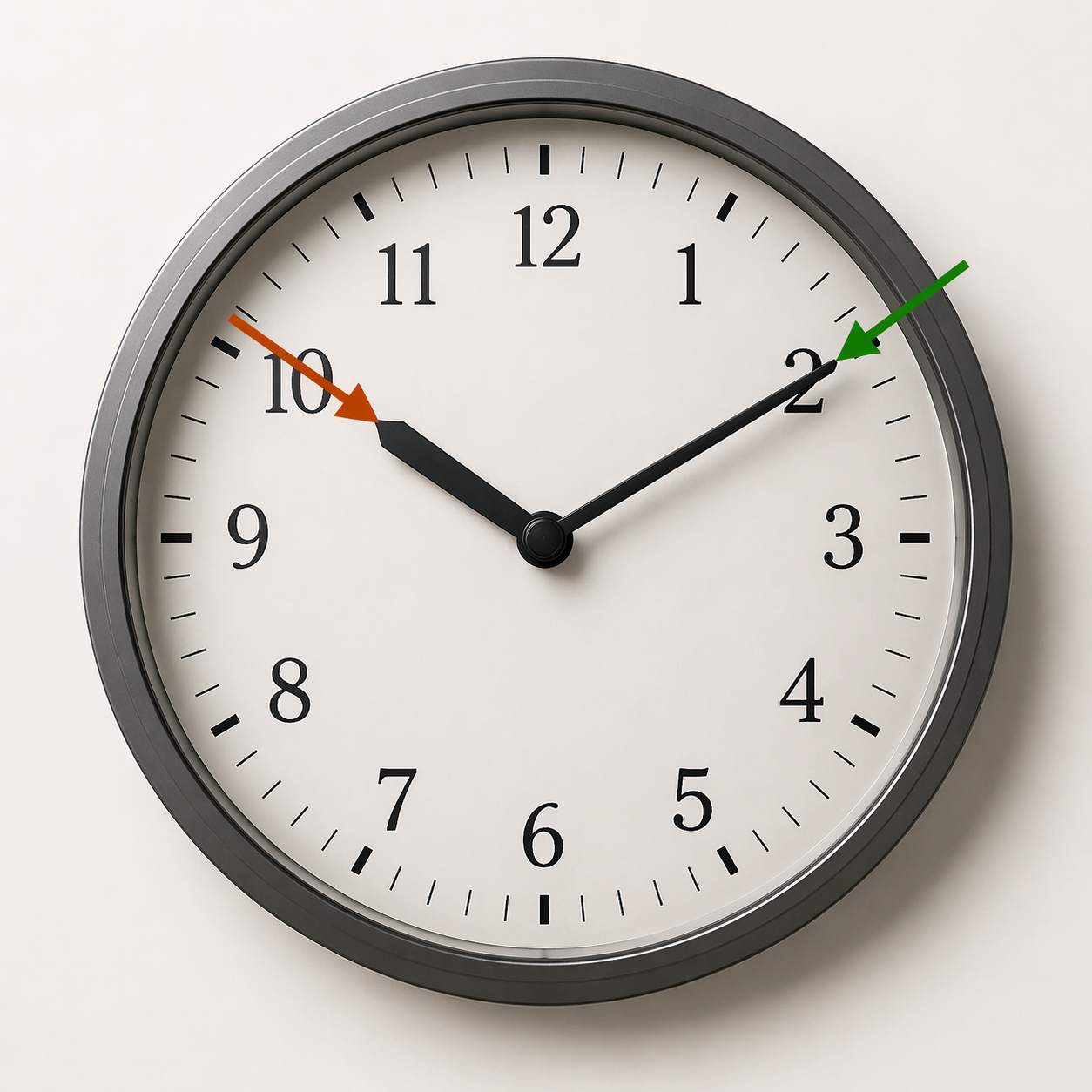
On an analog clock, the short hand shows the hour and the long hand shows the minutes.
The two hands of the clock
- The hour hand is the short hand.
- The minute hand is the long hand.
- The minute hand moves faster around the clock.
- The hour hand moves slowly from one number to the next.
Digital time and analog time
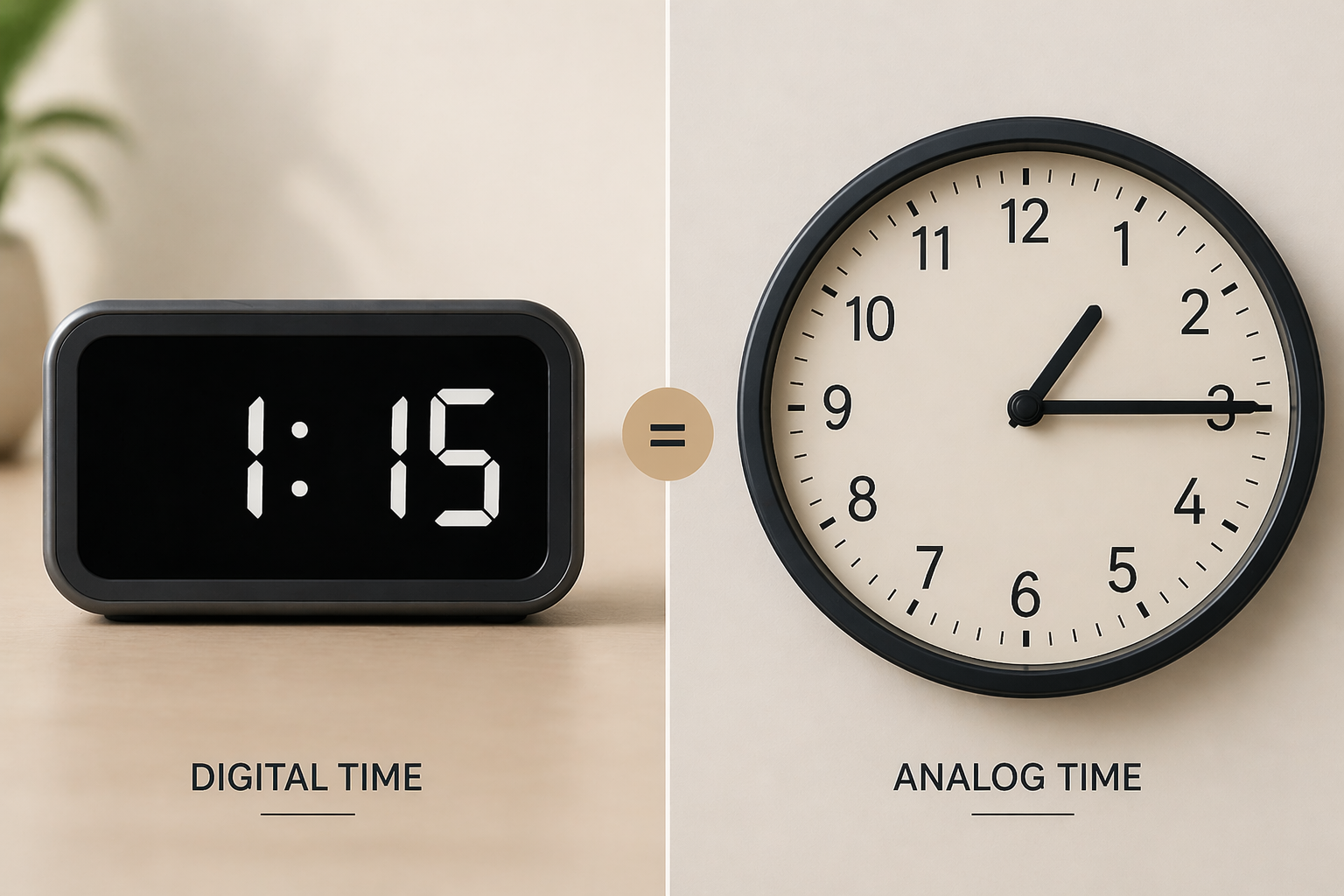
In daily life, many adults first read time as a number. English also uses that form, but spoken English often uses a more natural analog form.
- 1:15 = one fifteen or a quarter past one
- 1:30 = one thirty or half past one
- 1:45 = one forty-five or a quarter to two
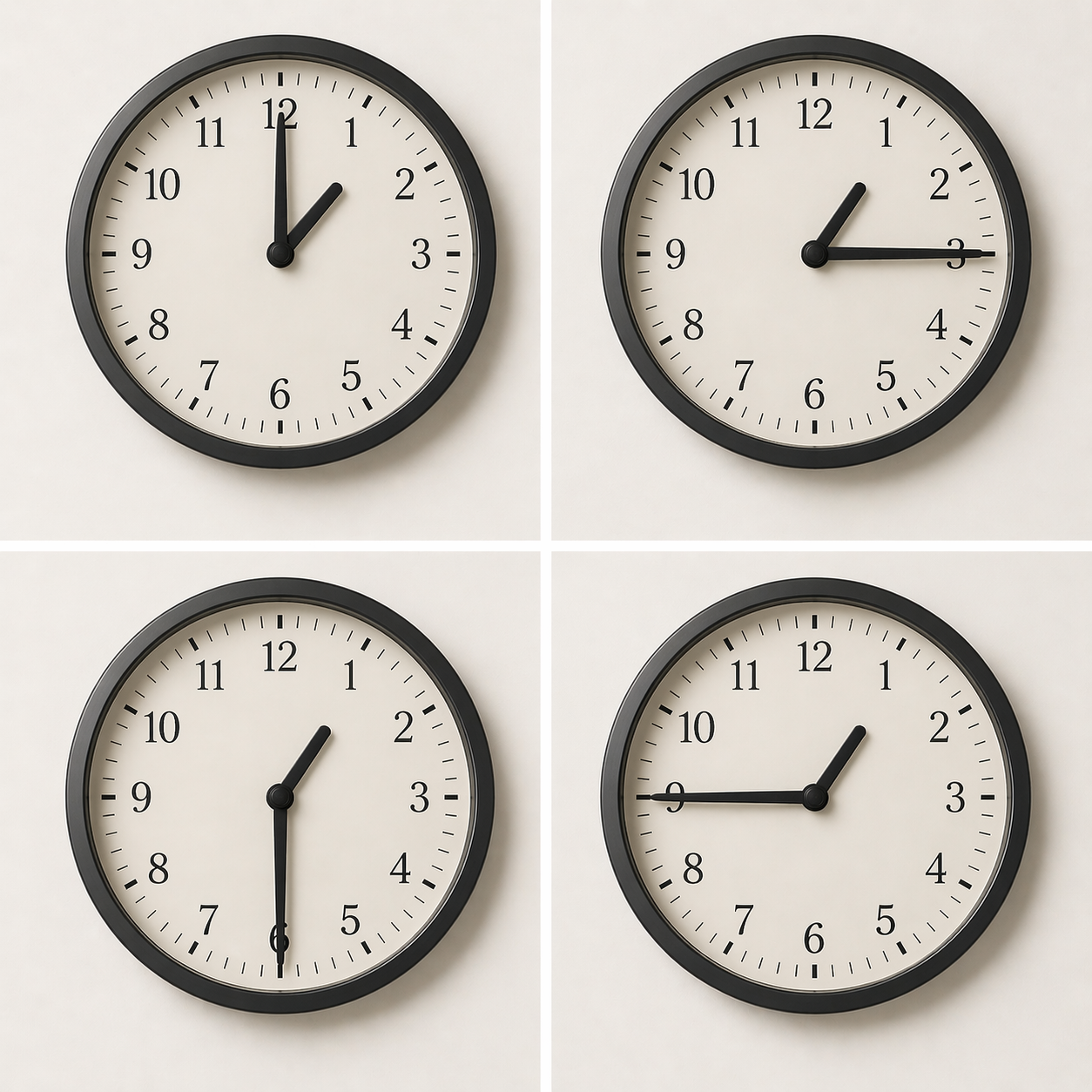
These four times give the core pattern students need first: exact hour, quarter past, half past, and quarter to.
Start with the most useful patterns
- 1:00 → one o’clock
- 1:15 → a quarter past one
- 1:30 → half past one
- 1:45 → a quarter to two
- Use o’clock only for exact hours.
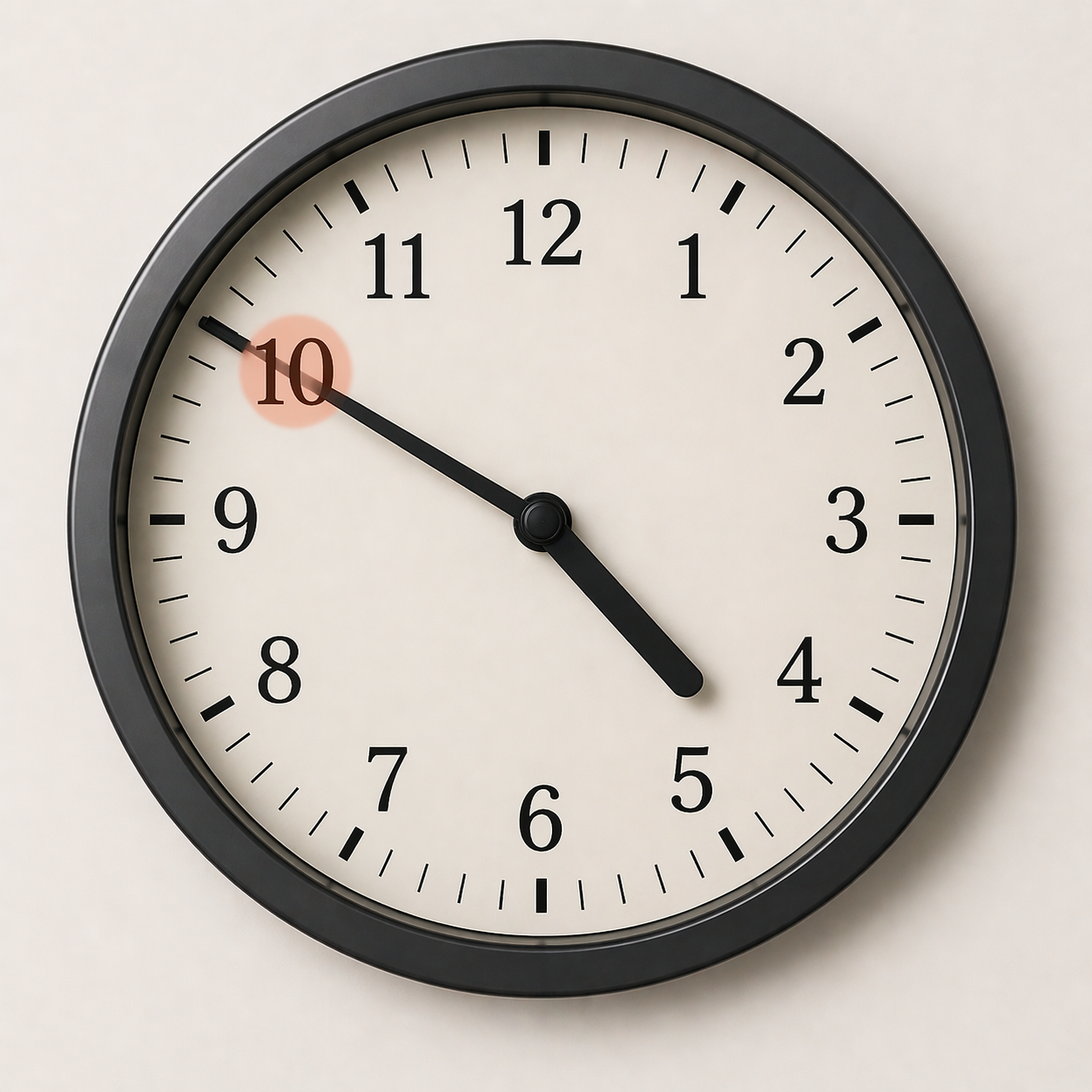
- Use past for minutes 1–30.
- Use to for minutes 31–59.
- With to, move to the next hour.
Past vs. To
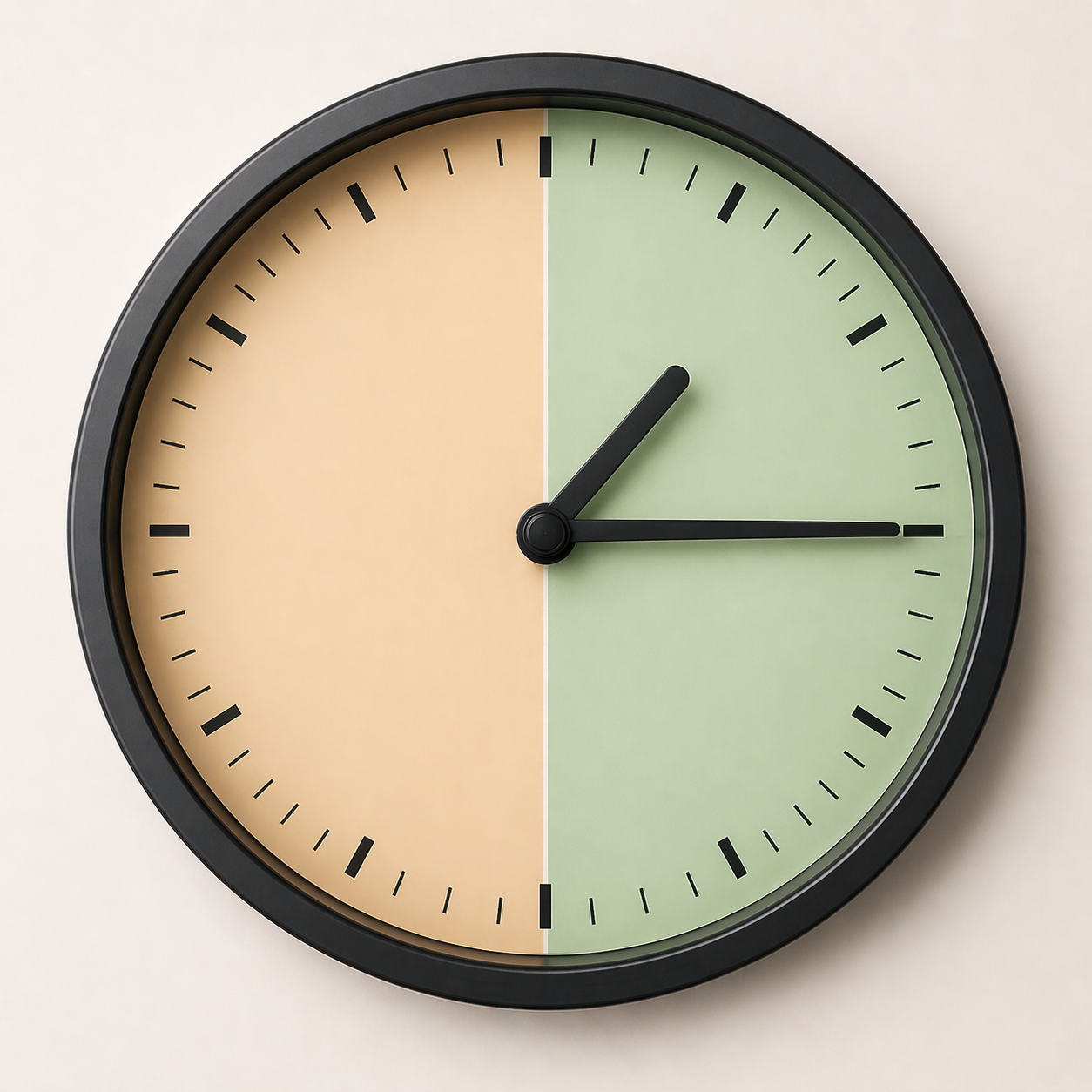
A simple visual rule helps a lot. The right side of the clock usually uses past. The left side of the clock usually uses to.
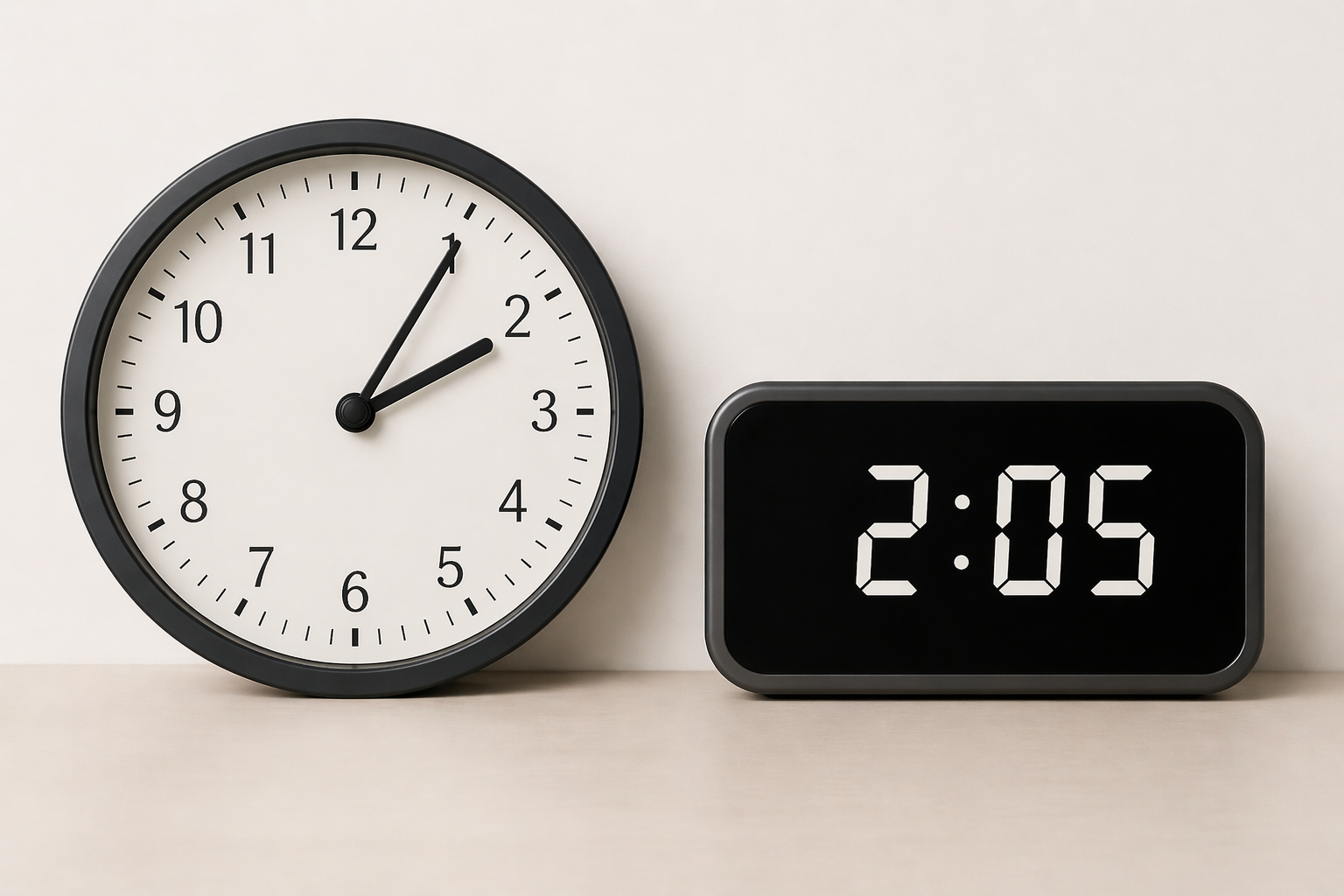
How to say times like 2:05
For minutes from 01 to 09, English often uses oh in the digital form.
- 2:05 → two-oh-five
- 6:03 → six-oh-three
- 9:07 → nine-oh-seven
Morning, afternoon, evening, and night
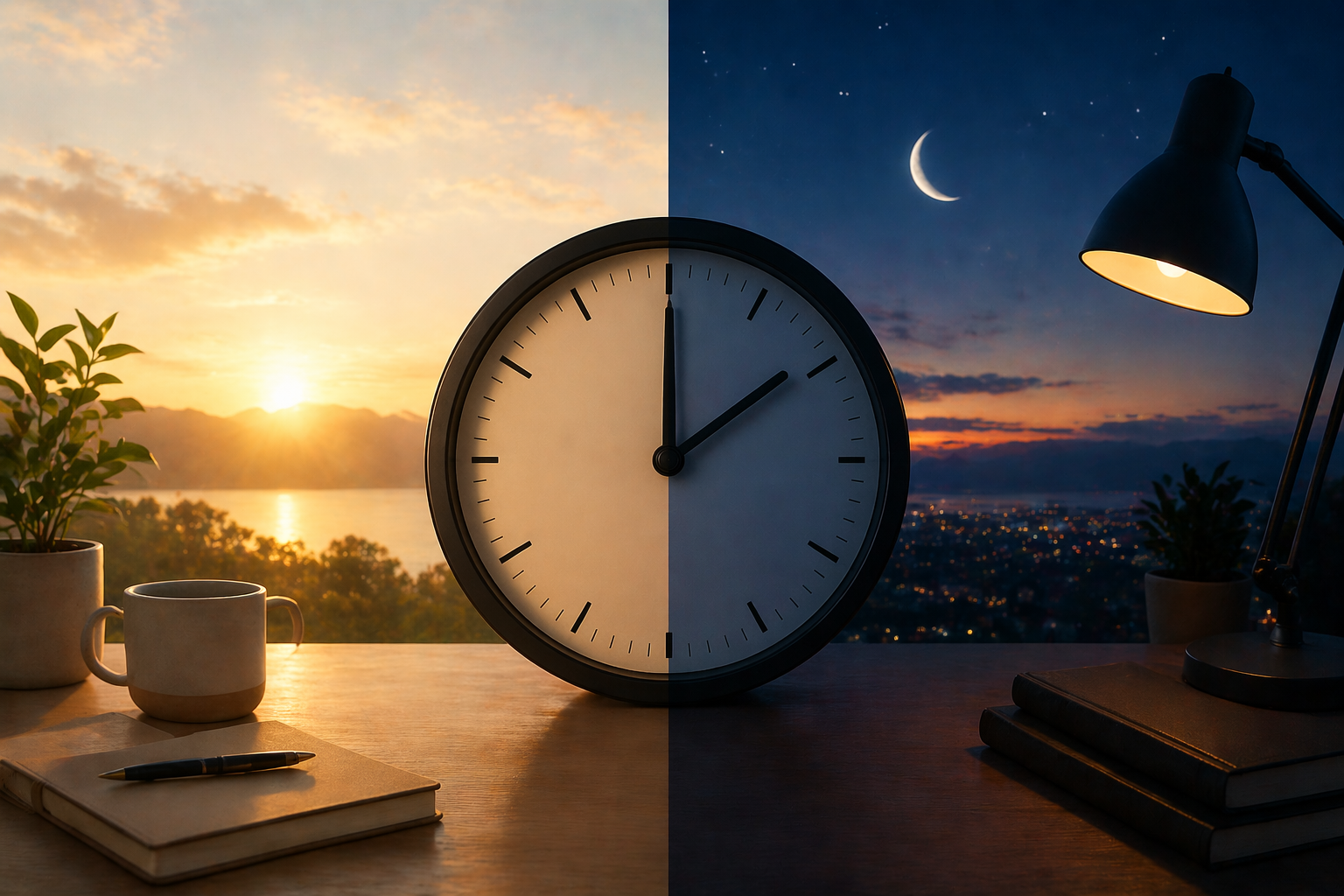
In conversation, English often uses natural time-of-day phrases instead of only saying AM or PM.
- 7:00 AM → seven in the morning
- 3:00 PM → three in the afternoon
- 8:30 PM → eight thirty in the evening
- 11:00 PM → eleven at night
Watch out for these mistakes
- Do not say 8:10 o’clock. Say eight ten or ten past eight.
- For to, move to the next hour.
- Start with It’s… in full sentences.
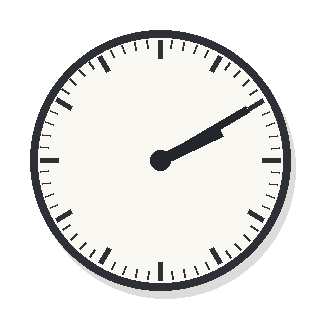
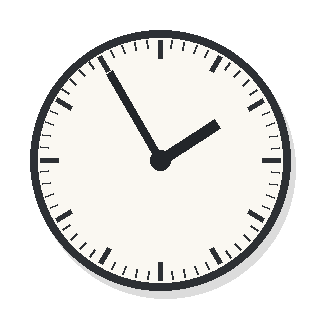
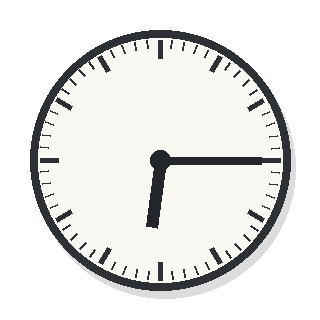
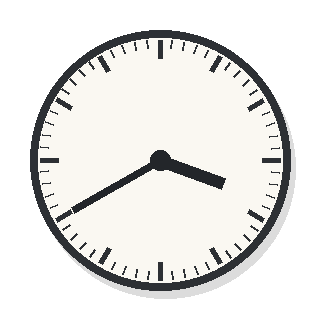
Read the analog clock and choose the correct answer
This section gives focused recognition practice. Students see a clock, choose the best English answer, and get instant feedback.
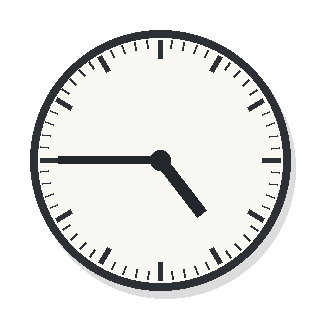
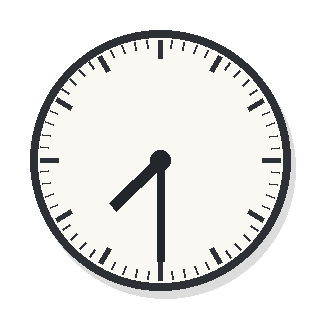
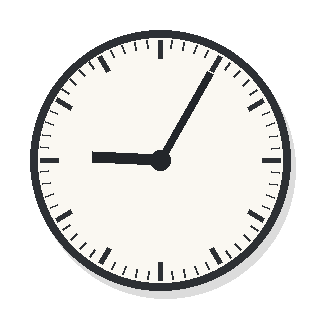
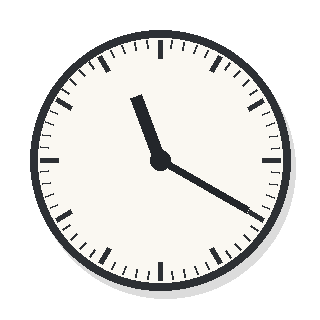
Write the time in full sentences
Complete the pattern

Talk about your day
- What time do you wake up?
- What time do you drink coffee or tea?
- What time do you start work?
- What time do you exercise?
- What time do you relax in the evening?
Read the schedule